Xiaomi Introduces Humanoid Robot to Automotive Assembly Line, Aligning with Tesla and BMW Initiatives
Xiaomi has debuted its first humanoid robot on an automotive assembly line, operating autonomously for three hours at a self-tapping nut workstation with a 90.2% success…
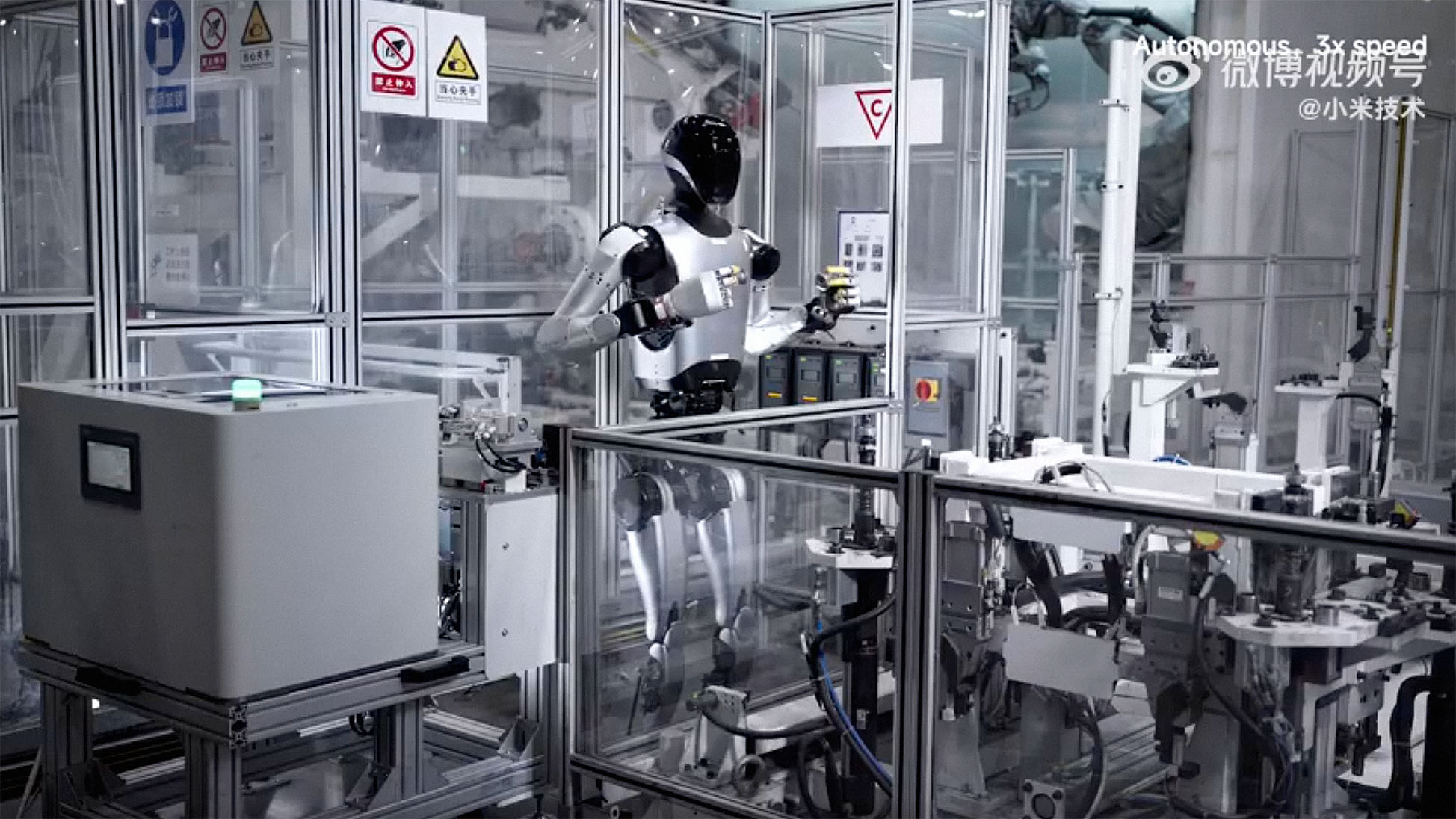
Xiaomi has announced the debut of a humanoid robot on its automotive production line, marking the company's first such deployment. The robot operated independently for three hours at a workstation dedicated to installing self-tapping nuts, achieving a 90.2% success rate in simultaneous dual-side installations. Officials noted that this performance is improving through ongoing testing, with the robot adeptly retrieving nuts from an automated feeder and securing them into positioning fixtures—despite challenges like intricate spline structures, variable gripping angles, and magnetic forces on pins.
Powering the robot is Xiaomi's in-house 4.7-billion-parameter Vision-Language-Action model, known as Xiaomi-Robotics-0, paired with reinforcement learning techniques. This combination minimizes the need for extensive manual data training, allowing the system to adapt rapidly to its surroundings. Xiaomi views this as a pivotal achievement in scaling humanoid robots for automotive manufacturing, with trials expanding to additional production stations and more details forthcoming.
In a December interview, CEO Lei Jun outlined plans for widespread factory adoption of humanoid robots within five years. He cited examples like AI-enhanced X-ray inspections that outperform manual methods by tenfold in speed and fivefold in accuracy for large components. Beyond industry, Jun envisions these robots entering homes, potentially unlocking a massive market opportunity valued in trillions of yuan.
Xiaomi's move aligns with industry trends, as BMW prepares a summer pilot at its Leipzig facility following April tests. Tesla's Optimus robot is already performing basic factory duties, with a third version slated for release this year. Meanwhile, Chinese rival XPeng aims to establish the sector's first mass-production hub for humanoids in Guangzhou by year's end, targeting large-scale output.